Dr. Confounder

Finding holes in blood pressure research affecting patient care. Not medical advice. Not affiliated with any institution. @DrConfounder

  • The Pleiotropic Illusion


    Attar A, Mirhosseini SA, Borazjani R, et al. Design and rationale for a randomized, open-label, parallel clinical trial evaluating major adverse cardiovascular events (pharmacological treatment versus diet control) in patients with high-normal blood pressure: the PRINT-TAHA9 trial. Trials. 2024;25:563.


    The definition of hypertension has become a subject of significant debate, with guidelines shifting the goalposts depending on the governing body. While the AHA defines hypertension at 130/80 mmHg, European guidelines maintain the threshold at 140/90 mmHg. The PRINT-TAHA9 trial protocol enters this gray zone to determine if we should treat “high-normal” blood pressure (systolic 130–140 mmHg) to prevent major adverse cardiovascular events (MACE). While the intent to clarify treatment thresholds is valid, the study design introduces a confounding variable that may obscure the true driver of any potential benefit: the specific pharmacological properties of the drugs chosen.


    The definition of hypertension has become a subject of significant debate, with guidelines shifting the goalposts depending on the governing body. While the AHA defines hypertension at 130/80 mmHg, European guidelines maintain the threshold at 140/90 mmHg. The PRINT-TAHA9 trial protocol enters this gray zone to determine if we should treat “high-normal” blood pressure (systolic 130–140 mmHg) to prevent major adverse cardiovascular events (MACE). While the intent to clarify treatment thresholds is valid, the study design introduces a confounding variable that may obscure the true driver of any potential benefit: the specific pharmacological properties of the drugs chosen.


    The protocol involves enrolling 1,620 adults with a systolic pressure of 130–140 mmHg and an ASCVD risk score exceeding 7.5%. The investigators are excluding patients with diabetes or prior cardiovascular events to isolate the effect of the intervention. Participants are randomized to either an “intensive” arm receiving pharmacotherapy plus a low-salt/low-fat diet, or a control arm receiving only the diet. The goal in the treatment group is to maintain systolic pressure below 130 mmHg, while the control group receives medication only if their pressure exceeds 140/90 mmHg.


    The primary methodological concern lies in the intervention itself. The treatment arm initiates therapy with a single-pill combination of amlodipine and valsartan. This design essentially compares a group receiving dual-agent therapy (calcium channel blockade and angiotensin receptor blockade) against a group managed with lifestyle modifications alone. If the treatment group demonstrates a reduction in MACE, the authors will likely attribute this to the lower blood pressure target. However, it is difficult to disentangle the hemodynamic benefit of lowering pressure from the pleiotropic effects of the drugs themselves.


    Valsartan acts on the renin-angiotensin-aldosterone system, which is known to influence endothelial function and vascular inflammation, while amlodipine provides direct vasodilatory and anti-anginal effects. By design, the intervention group receives cardioprotective agents with distinct biological mechanisms. The control group is denied these agents until they cross the threshold of 140/90 mmHg. To truly test the efficacy of the target (130 mmHg vs. 140 mmHg), both groups should ideally receive pharmacological therapy titrated to different goals, although even then the more intensively treated patients benefit from more RAAS blockade. Comparing pharmacotherapy to diet creates a difficult biological comparison.


    Furthermore, the open-label nature of the trial introduces the potential for bias. Participants are aware of their treatment assignment, which may influence subjective reporting of endpoints. The primary endpoint includes hospitalization for cardiovascular causes such as angina pectoris. A patient on active medication may feel protected and less likely to seek hospital care for mild symptoms, whereas a patient in the diet-only arm might be more reactive. Without blinding, subjective components of MACE can become noisy data.


    Finally, the strict exclusion criteria—removing patients with prior use of statins or antiplatelet agents—aim to reduce confounding, but they also reduce real-world applicability. In clinical practice, a patient with a >7.5% ASCVD risk and elevated blood pressure would likely be considered for lipid-lowering therapy. By stripping away concurrent risk modification, the study creates a clinical scenario that arguably does not exist in standard practice. When the results are published, we must be careful to discern whether we are seeing the benefits of a lower number on the manometer, or simply the benefits of treating vascular risk patients with cardioprotective medication.

  • Faster Prescribing Does Not Equal Better Physiology

    Xu W, Goldberg SI, Shubina M, Turchin A. Optimal systolic blood pressure target, time to intensification, and time to follow-up in treatment of hypertension: population based retrospective cohort study. BMJ. 2015;350:h158.


    When doing CPR, the mantra is “hard and fast.” It turns out the same is true for antihypertensive prescribing. In a new analysis of the “Health Improvement Network” database from the UK, looking at nearly 89,000 hypertensive patients to determine the “optimal” speed at which these medications should be initiated or adjusted, the authors conclude that we are essentially failing our patients if we do not intensify therapy within 1.4 months of an elevated reading or if we delay follow-up beyond 2.7 months.

    The implication is clear: speed saves lives. But as usual in these massive retrospective cohorts, the authors have likely overlooked numerous confounders.
    The study asserts that a systolic intensification threshold—the point at which a doctor decides to add a drug or increase a dose—greater than 150 mm Hg is associated with progressively greater risk of cardiovascular events or death. Conversely, they found no difference in risk between thresholds of 130 and 150 mm Hg. They also found that delays in intensification (waiting longer than that magical 1.4 months) were associated with increased hazard ratios. On the surface, this looks like a slam-dunk argument for aggressive, rapid-fire management. The authors even suggest that these findings support the “importance of avoiding delays” in medical management.


    However, statistics are not necessarily real life. By equating “intensification” with “better outcomes,” the study ignores the mechanism of action. We are asked to believe that the benefit comes solely from the reduction in hydrostatic pressure achieved by the timely intervention. But we know better.
    In the UK primary care setting during this era (1986–2010), “intensification” typically meant adding an ACE inhibitor, an ARB, or a specific calcium channel blocker. These agents do not merely lower the numbers on the sphygmomanometer; they have profound pleiotropic effects. They reduce oxidative stress, improve endothelial function, and reduce left ventricular remodeling. If a patient has a “low intensification threshold,” they are, by definition, more likely to be on a multi-drug regimen earlier in their disease course. Are they surviving because their systolic pressure is 138 mm Hg instead of 142 mm Hg? Or are they surviving because they are bathing their vasculature in renin-angiotensin-aldosterone system (RAAS) blockade? Like many studies in this area, it does not appear to adequately account for the specific class effects of the drugs being intensified. You can lower blood pressure with hydralazine, but you won’t get the same mortality benefit as you do with an ACE inhibitor. It may also be that patients with higher thresholds and worse outcomes were too sick to tolerate intensification.


    Additionally, in terms of the “time to intensification” metric, the authors claim that a delay of greater than 1.4 months is associated with increased risk. This is a classic case of confounding by indication and physician practice, as there are any number of social and clinical factors that could affect rapidity of prescribing  and also correlate with outcomes.


    Ultimately, this study reinforces a “treat-to-target” mentality that prioritizes the metric over the patient. It encourages the clinician to view a blood pressure reading as a ticking time bomb that must be defused within 1.4 months, rather than a hemodynamic variable that requires thoughtful, sometimes slow, titration. If we blindly follow this logic, we will simply increase the pill burden without asking which pills actually confer benefit. We should treat hypertension, yes (usually). But let’s not pretend that the benefit lies in the speed of the prescription rather than the pharmacology of those medications. For the good of our patients, hopefully these results do not replace common sense with a stopwatch.

  • Lower blood pressure, but stroke risk is unchanged

    Ogedegbe G, Teresi JA, Williams SK, Ogunlade A, Izeogu C, Eimicke JP, Kong J, Silver SA, Williams O, Valsamis H, Law S, Levine SR, Waddy SP, Spruill TM. Home Blood Pressure Telemonitoring and Nurse Case Management in Black and Hispanic Patients With Stroke: A Randomized Clinical Trial. JAMA. 2024 Jul 2;332(1):41-50. doi: 10.1001/jama.2024.6609. PMID: 38842799; PMCID: PMC11157441.

    Dr. Confounder previously wrote about a series of studies on the impact of nighttime antihypertensive dosing, and how this allows us to observe the clinical effect of reducing blood pressure without changing overall medication exposure. In these studies, no difference in major adverse cardiac events was identified. Another way to look at this is by studying the effect on blood pressures and adverse outcomes that comes with better adherence. Again, the benefit of such a study is that ideally the regimen is not significantly changed, thus removing the confounding pleiotropic effects from the equation.

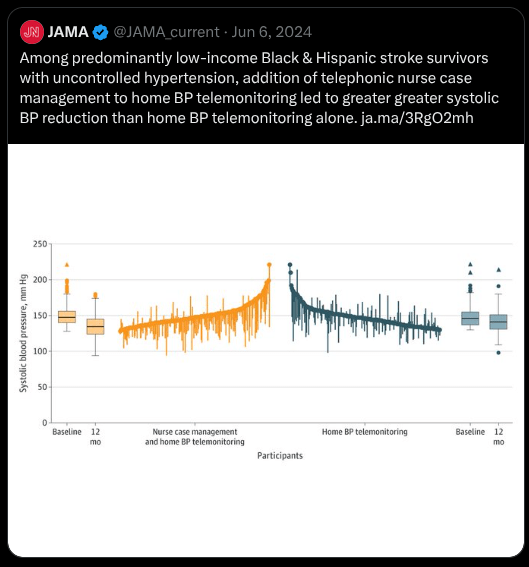
    A study published in JAMA in 2024 (https://jamanetwork.com/journals/jama/fullarticle/2819467) did just that. A cohort of 450 low income Black and Hispanic stroke survivors were randomized to receive either home blood pressure telemonitoring (HBPTM) and nurse case management (NCM) phone-based follow-up or HBPTM alone.

    After 12 months, the patients receiving both interventions saw significantly greater blood pressure reductions, approximately 10 mmHg more than the HBPTM group (−15.1 mm Hg vs. −5.8 mm Hg). Despite this, at 24 months, the rate of recurrent stroke was almost exactly the same (4.0% in both groups).

    A JAMA publicity tweet conveniently left out this second part.

    As always, even in this high risk population, or especially in this high risk population, large blood pressure reductions on their own fail to demonstrate superior outcomes.

    More evidence for the confounding that is almost always present when better outcomes are attributed to intensive blood pressure control.

  • Intensive Blood Pressure Control for the Frail Among Us?

    Li S, Peng Y, Li Y, Sun Y, Yan X, Zhang L, Liu J, Zhao L, Liu J, Qian J, Zhai N, Dong L, Ruan J, Zhang P, Wei X, Liu Y, Ma Q, Huang W, Zhang Q, An C, Liu J, Sheng L, Zhang H, Li J; ESPRIT Investigators. Effects of Intensive Blood Pressure Control in Patients With Frailty: A Post Hoc Analysis From ESPRIT. J Am Coll Cardiol. 2025 Oct 15:S0735-1097(25)07783-6. doi: 10.1016/j.jacc.2025.08.092. Epub ahead of print. PMID: 41091084.

    When I see an 80-something man or woman in the hospital, particularly if they’ve come in for a fall or a severe electrolyte abnormality, a frequent question I will pose to the residents is, “Will he/she live longer or feel better because they take this blood pressure medication?”

    The answer is usually an obvious “no.”

    Yet, given the current level of allegiance to intensive blood pressure control, there has been a recent effort to see just how far into life this paradigm can be stretched. A recent study in The Journal of the American College of Cardiology (https://www.jacc.org/doi/10.1016/j.jacc.2025.08.092) suggests that the answer is all the way to the end.

    This post-hoc analysis of the ESPRIT study looked at more than 11,000 patients across a stratified frailty index and showed no difference in impact of intensive treatment on major adverse cardiovascular events or safety according to frailty. However, as always, there is no information about what medications anyone was given, which is obviously a fundamental factor in understanding efficacy and safety of treatment.

    What is reported, however, is that more frail patients reached goal blood pressures more slowly, if at all. It seems that while demonstrating the safety of intensive blood pressure control, physicians (very reasonably) treated more frail patients more cautiously, potentially reducing their risk, but also undermining the premise of the study. While trying to determine whether intensive blood pressure control was safe and effective for everyone, they intuitively knew that there was increased risk in more frail patients.

    In fact, the authors conclude that “cautious titration of antihypertensive therapy and close monitoring of kidney function” is needed. So is it safe for everyone? If so, why do we need to be more cautious in certain patients?

    As an aside, in the adverse events table, the numbers for the severe events of interest (hypotension, syncope, electrolyte abnormalities, injurious falls, acute kidney injury) out of sub-cohorts of between 800 and 2600 patients are surprisingly low, with incidences in the single digits. These numbers seem highly unlikely, particularly in this population, raising questions about the reporting and thus the overall conclusions.

    For the good of our frail and elderly patients, hopefully these results do not replace common sense.

  • Major Headache

    Akavian I, Nitzan I, Twig G, Derazne E, Afek A, Cohen B, Calderon-Margalit R. Association Between Migraine and Hypertension in 2 Million Adolescents. Hypertension. 2025 Nov;82(11):e337-e345. doi: 10.1161/HYPERTENSIONAHA.125.24861. Epub 2025 Sep 4. PMID: 40904275.

    One of the best blood pressure readings I’ve ever had was taken for an insurance physical a couple of years ago. The nurse came to my house, and took my blood pressure with me sitting at the dining room table, left arm resting on the table, right arm petting the top of my soft fluffy doggy’s head. (Thanks buddy, you saved me money on insurance!)

    Now, imagine instead that I had been sitting in my doctor’s office suffering from a migraine, and they started by taking my blood pressure. How much higher would it have been? 30 points? 40? 50?

    The doctor explains that my blood pressure is high due to the shared microvascular pathology underlying my headache.

    No, you idiot, my blood pressure is high because I’m currently suffering with a damn headache.

    The doctor then tells me that I wouldn’t have this problem if I had received more intensive blood pressure control back in my twenties. In anger, my blood pressure goes even higher when rechecked 5 minutes later.

    This is the hypothesis suggested by a recent study in the journal Hypertension linking migraines to chronic hypertension. In this cross-sectional study of more than 2 million Israeli teenagers undergoing health screening for compulsory military service, subjects were screened for hypertension and were referred to a community physician if elevated pressures were detected. Migraines were diagnosed based on self-report. Overall patients with migraines had 3x the odds (adjusted) of hypertension, although overall only 0.2% received a hypertension diagnosis. More severe migraines were associated with higher blood pressures. (Obviously)

    In their discussion, the authors explain that prior studies on this issue were mixed, likely attributable to differences in population and methodology (i.e. were the patients being evaluated for military service at the times their blood pressures were checked?). They also address the contribution of stress, but claim to mitigate this by limiting the analysis to individuals without psychiatric conditions. As if headache pain would only raise blood pressure if you have bipolar disorder.

    At the end of the day, there very likely are complex microvascular phenomena contributing to both migraines and hypertension. But do we really think that a study involving a questionnaire and an air-filled plastic cuff is going to find them? And are the migraine patients flagged for high blood pressures actually the ones we need to worry about? Who knows?

    This gives me a headache.

  • It’s the Inflammation, Stupid!

    Pruzin JJ, Yau WW, Bress AP, Bardaran H, Chhatwal JP, Tariot PN, Cushman WC, Gupta A, Wright CB, Williamson J, Reboussin DM, Pajewski NM, Nasrallah IM, Kern KC. Effect of Intensive Systolic Blood Pressure Control on Markers of Cerebral Small Vessel Disease by Age. Hypertension. 2025 Dec;82(12):2150-2161. doi: 10.1161/HYPERTENSIONAHA.125.25202. Epub 2025 Oct 29. PMID: 41159258.

    We previously looked at a study exploring the association between hypertension and dementia, in which socioeconomic status was a major unacknowledged confounding factor. We have also discussed a number of studies where the biochemical mechanisms associated with hypertension and the drugs that interact with them have been ignored in favor of an overly simplistic relationship between systolic blood pressure and outcomes.

    In this post-hoc analysis of the SPRINT and ACCORD trials, which was recently published in the journal Hypertension, these concepts intersect, potentially resulting in a misunderstanding of the relationship between hypertension and dementia.

    In these studies, subsets of patients underwent baseline and follow-up brain MRI imaging, and were evaluated for measures of degenerative disease. In the ACCORD trial only, there was an interaction with age-group and intensive blood pressure control, indicating a reduction in progression of WMHv (White Matter Hyperintensity Volume) in younger patients (<= 65), as compared with older patients. Additionally, the authors report broader trends suggestive of slower progression in both trials, bolstering the case that intensive blood pressure control slows brain atrophy, particularly at younger ages.

    Even if these trends are taken at face value, statistically significant or not there is a major factor confounding the relationship between hypertension and cerebral small vessel disease: the hormones angiotensin and aldosterone.

    While both are implicated in resistant hypertension and are targets of treatment, they also independently cause neuronal oxidative stress and inflammation (https://pmc.ncbi.nlm.nih.gov/articles/PMC7349348), which have been shown to be associated with white matter disease, and blood pressure drugs affecting this axis such as ACE inhibitors and angiotensin receptor blockers (ARBs) have been shown to be protective (https://www.frontiersin.org/journals/aging-neuroscience/articles/10.3389/fnagi.2023.1137197/full).

    Patients subjected to intensive blood pressure control would likely receive more and higher doses of these drugs, explaining the better neuroprotection independent of blood pressure itself. This could also explain the stronger results in the ACCORD trial as compared with SPRINT, since these drugs would be indicated in particular for diabetic kidney disease.

    But if intensive blood pressure control achieves this result, why does it matter if the underlying cause is a systolic blood pressure under 120 mmHg or another effect of an ACE inhibitor? The answer is that if intensive control if achieved without these specific drugs, there may be no benefit, or if the patient does not reach the target blood pressure with maximum tolerated doses of these drugs, additional drugs from different classes may be added to further control blood pressure without any added benefit in terms of preventing cerebral small vessel disease and dementia.

    In this paper, Dr. Confounder found no consideration of the possibility that the choice of drug might actually matter. Across the spectrum of clinical hypertension research, this needs to change.

  • Comfort with Harm

    Dong X, Ling Q, Zhao X, Song Q, Cai J. Benefit and Harm of Intensive Blood Pressure Control by Cardiovascular Risk. Hypertension. 2025 Aug;82(8):1392-1400. doi: 10.1161/HYPERTENSIONAHA.125.25162. Epub 2025 Jun 26. PMID: 40567237.

    We all know the principle of Primum non Nocere — First, Do No Harm. To be clear, I hate hearing doctors in op-eds and social media posts pontificate about “our oath to do no harm,” because they either don’t know or don’t care that none of us actually swore to that, as it is not part of the Hippocratic Oath (https://www.health.harvard.edu/blog/first-do-no-harm-201510138421). Moreover, it is a nearly useless principle when caring for the sick, as was nicely laid out in this 2024 JAMA Pediatrics piece (https://jamanetwork.com/journals/jamapediatrics/fullarticle/2819056).

    That said, in routine hypertension management, patients are not sick. Thus, there should be a high bar for avoiding harm. Titrating a medication up to the point that patients begin falling over, fracturing their hips, and sustaining head injury — not to mention kidney failure and high risk electrolyte abnormalities — for a very likely confounded sense of benefit is a tall order.

    Let’s take a look at how hypertension researchers talk about harm by focusing on a recent study in the journal Hypertension entitled: “Benefit and Harm of Intensive Blood Pressure Control by Cardiovascular Risk.”

    In this post hoc analysis of the STEP trial, the authors showed that in the overall population, intensive treatment is associated with a lower risk of cardiovascular events (HR, 0.76 [95% CI, 0.61–0.94]; P=0.011). Again, association is not causation, and even though this was a randomized trial, essentially all blood pressure studies are confounded by pleiotropic effects of the drugs that may vary by dose. However, when stratified by cardiovascular risk, the benefit was only significant in the highest tertile, although the authors misleadingly state that “The rate of the primary outcome in each 10-year CVD risk tertile was lower in the intensive group.”*

    In terms of harm, intensive blood pressure control was shown to be more harmful than standard control in the highest two tertiles, with treatment related adverse events falling in the range of 6-9%. Even if benefit statistically outweighs harm, the chasm is not as impressive as we would want it to be.

    For a profession that claims to live by the mantra of “Do no harm,” with all its complexities notwithstanding, our comfort with doing real harm for an uncertain benefit is concerning. This is not cancer treatment where we weigh objective remission against rates of neutropenia, or an antibiotic trial where rates of blood culture clearance are weighed against rates of acute kidney injury. What we are doing here is knowingly predisposing nearly 10% of initially asymptomatic people to a range of real harms based on claims of a statistical benefit that may very well be misleading (see tertiles 1 and 2). Since the goal is avoidance, the benefit is almost entirely theoretical, while the potentially fatal hip fracture is not. In this setting, “significantly greater benefit over the harm” is not enough.

    In fact, the authors realize this, and “recommend caution,” but can we really predict with any degree of accuracy who is going to fall and break their hip, and almost as importantly, do so without bias (you can imagine the race and gender bias that would likely come into play)?

    That said, does this mean forgo treatment with these ACEs, ARBs, and diuretics? No. But instead of chasing “intensive” blood pressure goals (or any other blood pressure goal for that matter), we should titrate to the maximum safely tolerated dose as we would with any other medication to minimize risk to the patient.

    *This misleading statement was parroted by NEJM Journal Watch (https://www.jwatch.org/na58968/2025/07/18/intensive-blood-pressure-control-do-benefits-and-harms), which then stated, “Patients with the highest baseline risk gained the greatest benefit from intensive BP control.” In this study, only patients in the highest group were shown to have any benefit.

  • A SPRINT for Diabetes

    Bi Y, Li M, Liu Y, Li T, Lu J, Duan P, Xu F, Dong Q, Wang A, Wang T, Zheng R, Chen Y, Xu M, Wang X, Zhang X, Niu Y, Kang Z, Lu C, Wang J, Qiu X, Wang A, Wu S, Niu J, Wang J, Zhao Z, Pan H, Yang X, Niu X, Pang S, Zhang X, Dai Y, Wan Q, Chen S, Zheng Q, Dai S, Deng J, Liu L, Wang G, Zhu H, Tang W, Liu H, Guo Z, Ning G, He J, Xu Y, Wang W; BPROAD Research Group. Intensive Blood-Pressure Control in Patients with Type 2 Diabetes. N Engl J Med. 2025 Mar 27;392(12):1155-1167. doi: 10.1056/NEJMoa2412006. Epub 2024 Nov 16. PMID: 39555827.

    https://www.nejm.org/doi/10.1056/NEJMoa2412006

    In the same vein as the SPRINT trial, the Chinese BPROAD trial published in NEJM last year attempted to evaluate the effect of intensive blood pressure control in patients with diabetes. In this study, which included more than 6000 patients in each arm, after a median follow-up of 4.2 years they reported a 0.79 hazard ratio for the primary outcome of major adverse cardiac events with intensive blood pressure treatment.

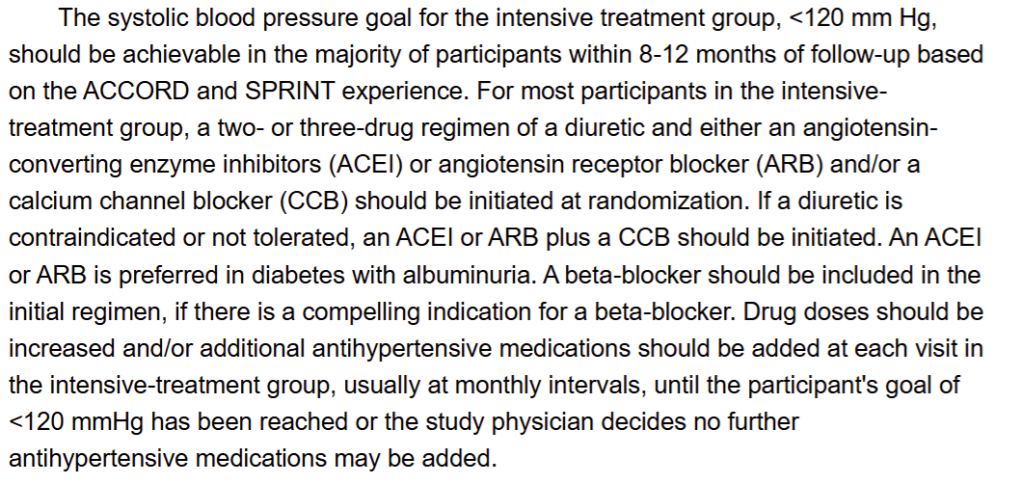
    Although the trial dosing protocol was somewhat tighter than in SPRINT, they still employed at least four classes of drugs — diuretics, ACE, ARB, and calcium channel blockers. And as in many similar studies, they did not appear to think twice about the confounding that they introduced by tailoring each patient’s regimen based on his or her comorbidities, such as ACE and ARB to treat albuminuria and beta blockers for their various indications. While one cannot fault them for doing this, we need to spread the credit for the protective forces working for them rather than attributing everything to blood pressure.

    Likewise, we need to consider that patients with a lower blood pressure goal would have been able to take more of these miracle medications, availing them of a range of beneficial mechanisms not available at the same intensity to those in the standard treatment group.

    Stated simply, if we think that treating albuminuria and heart failure matters, and drugs like lisinopril and losartan benefit these patients by reducing that risk in ways other than blood pressure reduction, how can we ignore all of these other effects when we increase the doses of them to achieve a more stringent blood pressure goal?

    We seem to forget this every time we run a blood pressure trial.

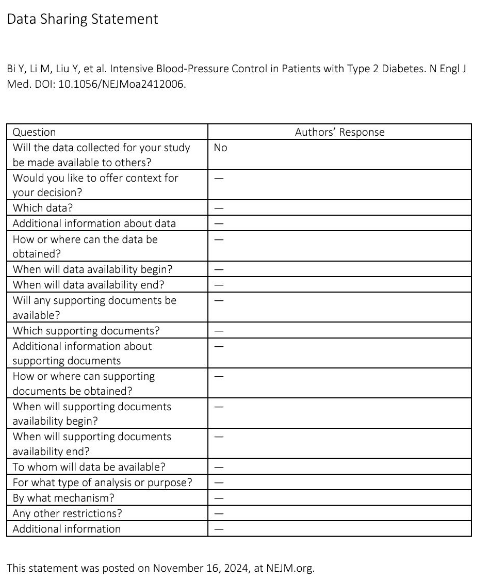
    But at least for this study, perhaps we could do a secondary analysis of the data to try to parse out these effects. Let’s check the data sharing statement to see how we can access the data, summarized as follows:

    Will the data be made available to others? No.

    Care to explain why not? Also no.

    Does this matter to NEJM?

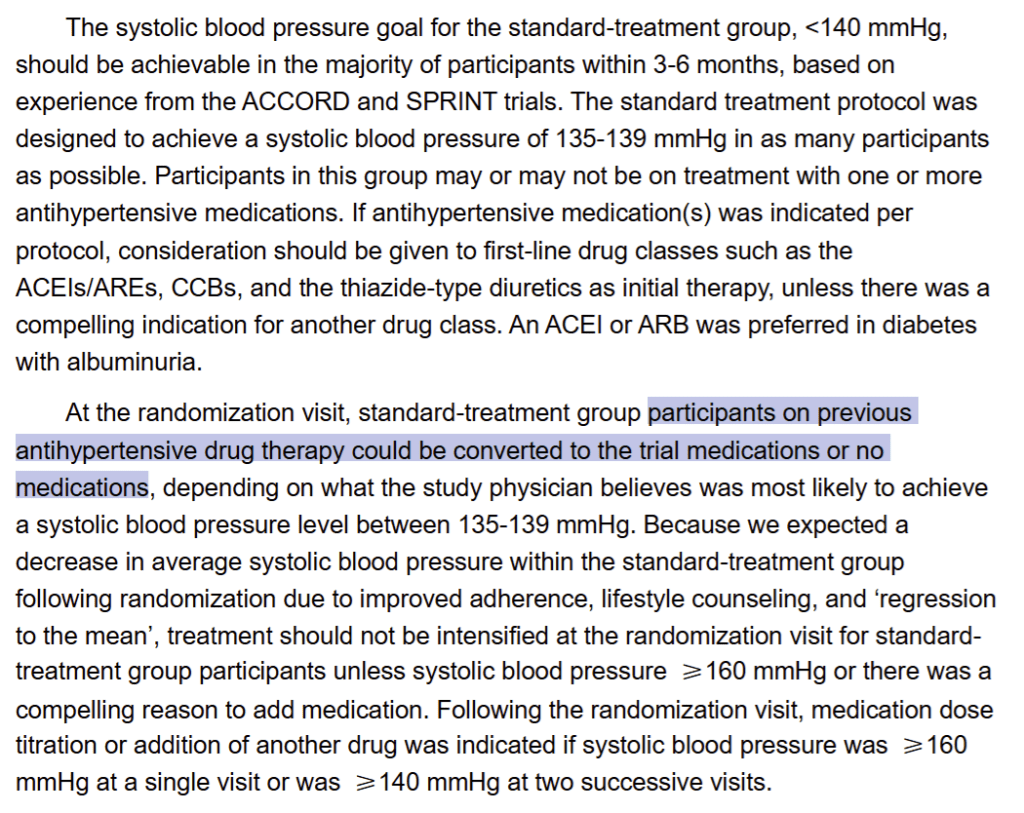
    Treatment Protocols (Screenshot from Supplement 3):

    (a) Intensive Treatment Group (S3)

    intensive offered an opportunity to streamline medications, standard more laissez faire

    (b) Standard Treatment Group (S3)

  • A Nighttime Experiment

    https://www.medscape.com/viewarticle/rise-and-fall-and-rise-again-bp-chronotherapy-2025a1000t3a

    Dr. Christopher Labos, a cardiologist and epidemiologist at McGill University, wrote a nice article for Medscape entitled “The Rise and Fall and Rise Again of BP Chronotherapy,” in which he outlines the debate about whether it matters when during the day you taking your blood pressure medication.

    Following the controversial “Hygia Chronotherapy Trial,” which was stamped with a statement of concern by the journal that published it, three subsequent trials, BedMed (https://jamanetwork.com/journals/jama/fullarticle/2833860), TIME (https://www.thelancet.com/journals/lancet/article/PIIS0140-6736(22)01786-X/fulltext), and OMAN (https://jamanetwork.com/journals/jamanetworkopen/fullarticle/2836172) were undertaken to settle the question.

    Besides their straightforward intended purpose, these studies are interesting because they offer a unique opportunity to examine the effects of medical management (as opposed to yoga) of blood pressure without the confounding effects of changing overall medication exposure.

    In the BedMed trial, there was no statistically significant difference in daytime blood pressure between the morning and evening groups, but overnight blood pressures were lower in the evening group. Over a median of 4.6 years, there was no difference in death or major adverse cardiovascular events. In the TIME trial, the relative blood pressures between the two groups in the morning and evening were both significantly different and were the inverse of one another. Again, over a median follow-up of 5.2 years, there was no difference in major adverse cardiovascular events. The more recent OMAN trial (https://jamanetwork.com/journals/jamanetworkopen/fullarticle/2836172) showed overall lower blood pressures in the nocturnal dosing group than in the morning group, but was not long enough in duration to assess risk of adverse cardiovascular events.

    Dr. Labos summarizes the findings as follows:

    “While the results are not wholly consistent across all three trials, there does appear to a modestly greater blood pressure reduction associated with evening dosing. But importantly, that difference did not translate into reduced cardiovascular events in BedMed or TIME. OMAN was only 12 weeks in duration and did not assess hard clinical endpoints.:

    His assessment:

    In short, nighttime dosing may slightly improve blood pressure control but not enough to prevent heart attacks or stroke.

    This is a fair interpretation, and if we believe it, that’s fine. End of story.

    But if we take these blood pressure reductions — some measured over the course of years — as real and meaningful, we have to consider the possibility that when the drug exposure is the same, we do not benefit from lower blood pressure. In other words, assuming we think 5mg of lisinopril gives the same ACE-blocking exposure whether it is given at 8am or 8pm, the blood pressure that is achieved is not the key driver of clinical benefit. Otherwise, we would expect that treating to a lower blood pressure, even if only by changing the time of administration, should yield the benefits commonly attributed to this increased blood pressure lowering.

    Since we do not observe this, maybe it is that when we treat blood pressure more intensively, we accrue benefit by increasing drug exposure (as you would by increasing the dose of a statin), and lower blood pressure is just a side effect.

  • An Unethical Research Proposal

    Wilson LM, Abebe KZ, Anderson TS. How Should Elevated Blood Pressure Be Managed in Hospital? NEJM Evid. 2024 Dec;3(12):EVIDtt2400202. doi: 10.1056/EVIDtt2400202. Epub 2024 Nov 26. PMID: 39589191.

    https://evidence.nejm.org/doi/full/10.1056/EVIDtt2400202

    Inpatient blood pressure management is an interesting topic, because while longitudinal outpatient studies have shown benefit from intensive blood pressure control (if deeply confounded), multiple inpatient studies have shown that any ad hoc blood pressure treatment in non-cardiac patients is associated with multifaceted harm (AKI, MI, stroke, mortality).

    In this “Tomorrow’s Trial” piece published in NEJM Evidence , the authors acknowledge this, but point to a lack of randomized trials to suggest that there may be a hidden benefit in terms of specifically reducing major adverse cardiac events, despite that observational studies have shown such blood pressure control to be associated with increased risk of MI (https://jamanetwork.com/journals/jamainternalmedicine/fullarticle/2774562) and stroke (https://www.ahajournals.org/doi/10.1161/HYPERTENSIONAHA.121.17279), with no threshold above which treatment has been shown to be beneficial.

    The authors go on to propose a trial where patients are randomized to one of two arbitrary blood pressure thresholds, 140mmHg or 160mmHg, despite the best evidence to date suggesting that patients in both groups would be at increased risk of harm.

    This violates the principle of equipoise or “genuine uncertainty” (https://www.ahajournals.org/doi/10.1161/circresaha.116.309594) as to the harm/benefit of the intervention. When observational studies predict harm in both arms, the lack of a randomized clinical trial for confirmation does not create clinical equipoise, making the proposed trial unethical.